WorkLLama
Transforming Talent Acquisition with AI-Driven insights
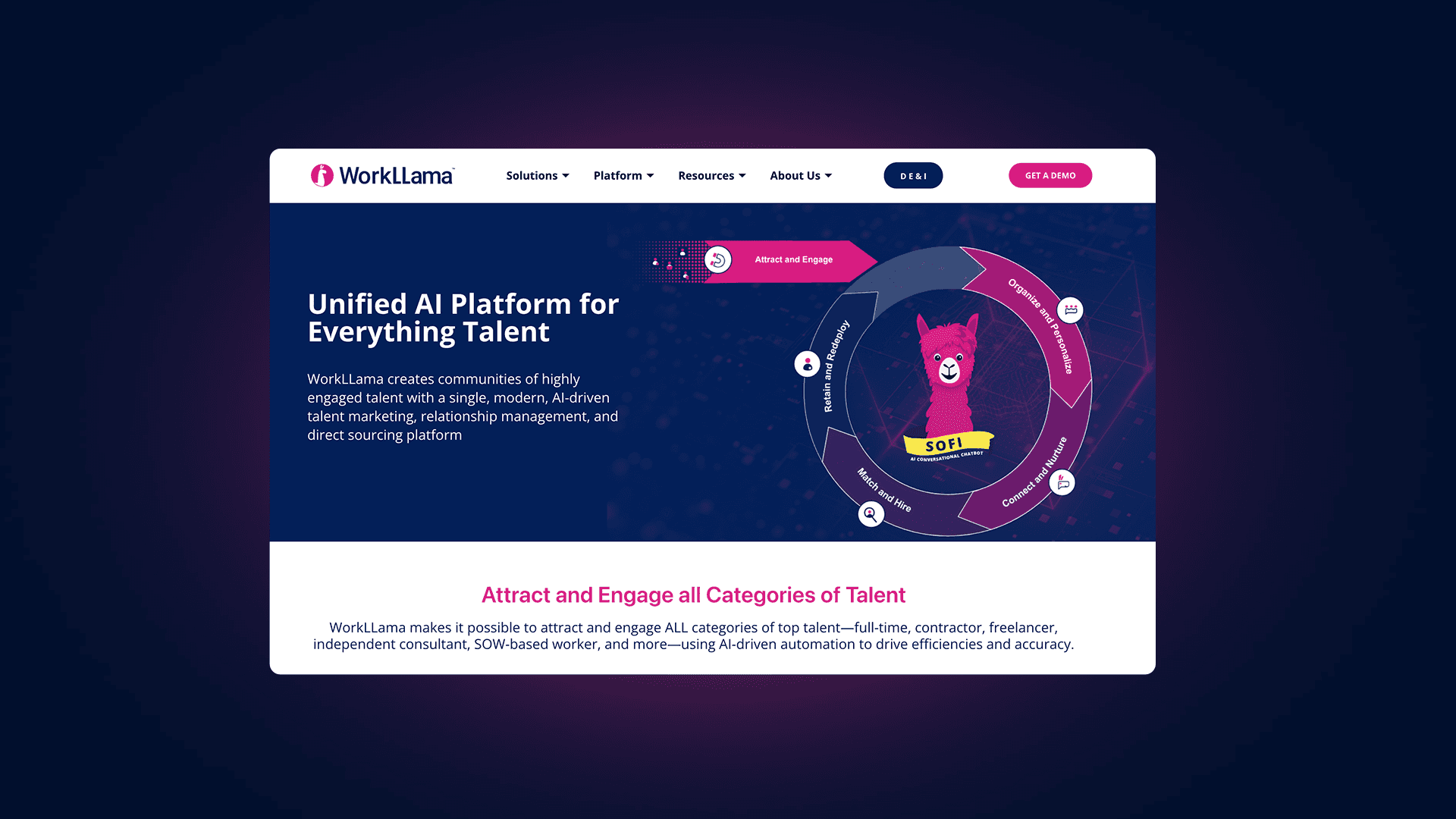
As the Senior Product & UX Designer at WorkLLama, I led the end-to-end design strategy for an AI-powered talent acquisition platform. The core objective was to enhance the recruiting lifecycle through intelligent automation while enabling clients to build customizable, white-labeled career sites that seamlessly integrated with their employer brand. By leveraging user-centered design principles and a modular design system, we delivered a highly scalable solution that not only optimized recruiter workflows but also elevated candidate engagement through personalized experiences. The platform was designed to be adaptable, allowing clients to maintain brand consistency while achieving their unique employer branding and talent acquisition goals.
Key outcomes included:
Improved recruiter efficiency through AI-driven automation and streamlined workflows.
Enhanced candidate engagement via personalized user journeys and intuitive UI/UX patterns.
Empowered clients to create differentiated, branded experiences that aligned with their overall talent strategy.
01
Problem
Recruiters and hiring managers faced significant operational inefficiencies due to the prevalence of repetitive, manual tasks, which extended time-to-hire and reduced overall productivity. The absence of personalized, data-driven tools hindered their ability to engage candidates effectively, leading to low engagement rates and a high incidence of candidate drop-offs during the application process. Additionally, the existing career sites were rigid and lacked the necessary flexibility for clients to fully express their unique employer brand identity, further diminishing user engagement and failing to differentiate them in a competitive talent market.
01
Problem
Recruiters and hiring managers faced significant operational inefficiencies due to the prevalence of repetitive, manual tasks, which extended time-to-hire and reduced overall productivity. The absence of personalized, data-driven tools hindered their ability to engage candidates effectively, leading to low engagement rates and a high incidence of candidate drop-offs during the application process. Additionally, the existing career sites were rigid and lacked the necessary flexibility for clients to fully express their unique employer brand identity, further diminishing user engagement and failing to differentiate them in a competitive talent market.
02
Objectives
Develop an AI-driven, scalable solution that automates repetitive recruitment workflows to enhance recruiter efficiency and reduce time-to-hire.
Design modular, customizable career sites that empower clients to showcase their employer brand in a way that enhances candidate engagement and aligns with their unique identity.
Create a mobile-first, accessible user experience that adheres to modern UX best practices, including compliance with ADA/WCAG standards, ensuring inclusivity for all users.

03
Design Process
1. Collaborative Ideation and Research
Cross-Functional Collaboration: Partnered closely with product managers, engineers, and senior stakeholders to foster a shared vision and ensure alignment throughout the project lifecycle. Conducted over 60 in-depth user interviews with recruiters, hiring managers, and job seekers to uncover critical pain points and unmet needs in the talent acquisition process.
Competitive Analysis: Performed a comprehensive competitive analysis of five leading talent acquisition platforms, benchmarking features like customization, brand representation, and user engagement. Additionally, we drew inspiration from consumer-focused digital experiences to identify opportunities for improving personalization and user engagement within the recruitment space.
User Surveys: Distributed surveys to over 500 users to gather quantitative insights into common frustrations in the recruitment journey. The findings emphasized the need for brand-centric career sites and validated the importance of a mobile-first design, with over 60% of candidates accessing career sites via mobile devices.
2. Wireframing, Prototyping, and Customization Framework
Modular Design System: Developed a scalable, component-based design system in Figma, enabling clients to customize site elements while maintaining visual consistency across branded career sites. This system supported multiple theme variations, allowing for rapid adaptation to diverse client branding requirements.
Mobile-First, Responsive Design: Adopted a mobile-first approach, creating adaptive layouts that ensured seamless usability across all devices. Designed intuitive user flows that reduced navigation steps by 40%, leading to a more streamlined and engaging candidate experience.
Recruiter Dashboard Design: Designed an interactive recruiter dashboard featuring real-time metrics like candidate engagement levels and job status tracking. These visualizations provided recruiters with actionable insights, optimizing their workflows and decision-making processes.
Iterative Prototyping: Produced low-fidelity wireframes, interactive prototypes, and high-fidelity designs in an iterative process. Led three rounds of design iterations based on user feedback, continuously refining the product to align with both user needs and business objectives.
3. Usability Testing and Validation
Remote User Testing & A/B Testing: Conducted five remote usability testing sessions with 50 participants to evaluate core interactions, layout preferences, and brand representation. Additionally, ran A/B tests with over 1,000 users to validate hypotheses around user engagement and feature adoption.
Data-Driven Iteration: Leveraged both qualitative feedback from usability testing and quantitative data from A/B testing to make informed design decisions. Integrated usability testing into agile sprints for continuous validation of design assumptions at each phase of development.
4. AI-Enhanced Features for Candidate and Recruiter Efficiency
Smart Matching & Personalization: Designed AI-powered features such as dismiss and "not interested" actions for candidates. These interactions fed back into WorkLLama’s machine learning algorithms to improve the relevance of job recommendations over time, driving higher candidate engagement.
Dynamic Action Menus: Created a mobile-friendly dynamic action menu that streamlined navigation by allowing users to quickly access key actions (e.g., viewing job details, applying for positions, or saving jobs for later), enhancing overall usability.
5. Accessibility and Inclusive Design
WCAG/ADA Compliance: Ensured all designs adhered to ADA/WCAG standards by conducting regular accessibility audits throughout the design process. This proactive approach helped identify potential issues early on, ensuring the final product was inclusive for all users.
Engaging Interactive Elements: Incorporated engaging elements such as employee testimonials, multimedia sections, and company culture showcases. These features enriched the candidate experience by offering an authentic glimpse into each employer’s brand identity.
6. Design Handoff and Implementation Support
Comprehensive Handoff: Delivered high-fidelity design assets along with detailed documentation to the engineering team through Figma’s collaboration tools. Provided clear guidance on interaction patterns, responsive behaviors, and branding guidelines to ensure smooth implementation aligned with design intent.
Ongoing Support & UX Checkpoints: Maintained regular UX checkpoints during each sprint cycle to review progress against design standards. This ensured that the final product adhered closely to both user needs and business goals while maintaining high-quality execution throughout development.

04
Results & Impact
80% Increase in Customer Engagement: The introduction of the customizable, AI-driven platform significantly enhanced user engagement, driven by personalized brand experiences and tailored candidate journeys. This reflected the platform's ability to deliver hyper-personalized interactions that resonated with both recruiters and candidates, increasing overall satisfaction and interaction rates.
60% Growth in Sales and Market Expansion: The scalable design system enabled WorkLLama to expand its market presence by 40% across key regions, including the US, UK, APAC, and Australia. The flexibility of the platform allowed for rapid adaptation to diverse client needs, contributing to a 60% increase in sales as new markets were penetrated effectively.
75% Reduction in Time-to-Market: By implementing a modular B2B2C white-labeled career site framework, we drastically reduced the time-to-market for new features by 75%. This was achieved through reusable design components that allowed for faster iterations and deployment across multiple clients without sacrificing customization or brand integrity.
35% Increase in Job Applications: The mobile-first, responsive design and branded site customization directly contributed to a 35% increase in job applications. Candidates were more engaged due to an optimized user experience that simplified navigation and improved accessibility, particularly on mobile devices where over 60% of users accessed the platform.
25% Reduction in Time-to-Hire: Enhanced navigation, AI-powered job matching, and improved accessibility features streamlined the application process for candidates. This resulted in a 25% reduction in time-to-hire for clients, as recruiters could quickly identify and engage with top talent through actionable insights provided by the platform.